
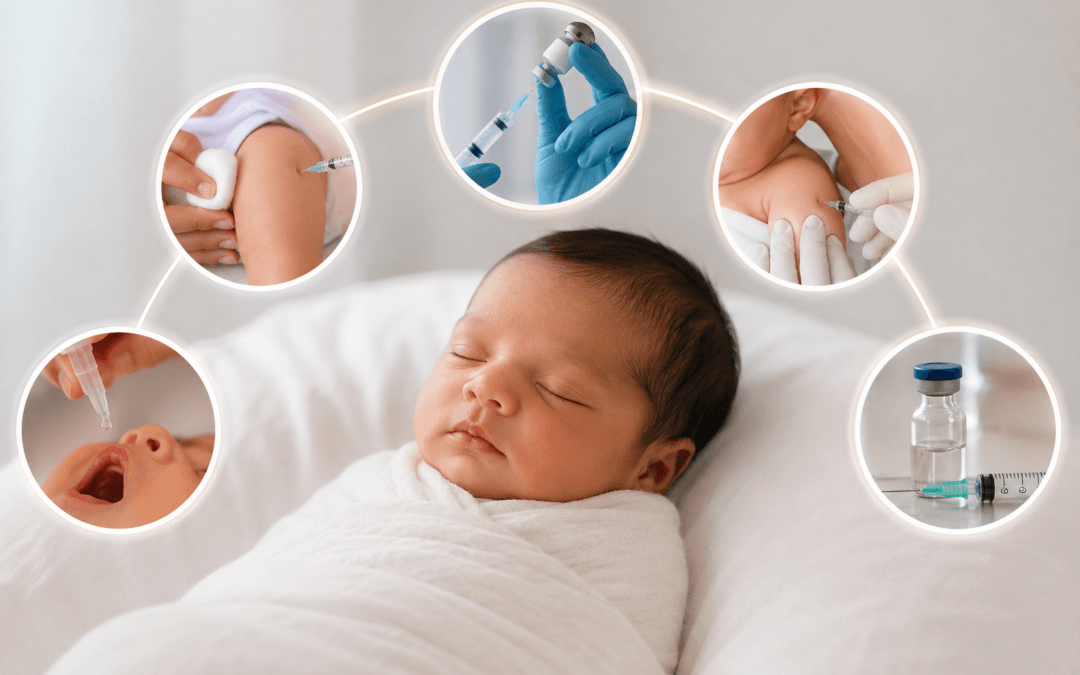
A newborn in India needs three vaccines within the first 24 hours of birth: BCG, the OPV zero dose, and the Hepatitis B birth dose. These are given before the baby even leaves the hospital, usually within the first day, sometimes within hours if the delivery went smoothly. After that, the schedule moves in phases, tied to the baby’s age in weeks and months, not to any fixed calendar date. The Universal Immunization Programme covers the essentials for free, and the IAP schedule adds a few more for broader protection. Most pediatricians in India end up recommending a mix of both.
According to Dr. Sneha Patil, a leading Gynecologist in Bandra East, “Parents often assume vaccination starts later, but the first three shots happen before the baby is even a day old, so it helps to know this in advance rather than during labour.”
Which Vaccines Come First At Birth?
The birth doses are the ones parents are least prepared for, mostly because they happen so fast, often while the mother is still recovering from delivery herself. Here’s what gets given and why.
BCG: Protects against severe forms of tuberculosis and is usually given as a single shot on the left upper arm within the first day, and the tiny mark it leaves behind is completely normal, not a reaction to worry about.
OPV Zero Dose: A few oral drops that start building gut immunity against polio, and this one’s easy, no needle involved, the baby barely reacts to it at all.
Hepatitis B: The birth dose matters more than people realise because it’s the single most effective way to stop mother-to-child transmission if the mother happens to carry the virus, and timing here really does make a difference.
Vitamin K: Not technically a vaccine, but it’s given alongside the birth doses to prevent a rare bleeding disorder, and most hospitals bundle it into the same round of injections without parents even asking.
Hospitals almost always complete these three before discharge, so parents rarely need to arrange anything themselves for week one. For families planning ahead, it helps to also understand newborn care routines that go alongside the early vaccination schedule.
What Comes After The First Six Weeks?
Once the baby crosses six weeks, the schedule shifts into a more structured phase, and this is where most of the injections parents associate with “baby vaccines” actually happen.
Six Week Cluster: DTwP, IPV, Hib, Hepatitis B, PCV, and rotavirus all fall due around this point, and yes, that’s a lot in one visit, but it’s spaced out safely and pediatricians are used to managing multiple shots at once.
Ten And Fourteen Weeks: The same set of vaccines repeats as a second and third dose, because most of these need three rounds to build lasting immunity, not just one.
Nine Months: The Measles-Rubella shot comes in here, timed specifically because maternal antibodies protecting the baby start wearing off around this age, leaving a gap that needs covering.
Boosters: Between sixteen and twenty-four months, several of the earlier vaccines get a booster round, reinforcing protection that would otherwise start fading as the toddler gets more mobile and exposed.
Missing a dose by a few weeks usually isn’t an emergency, but it shouldn’t become a habit either, since the spacing between doses exists for a reason. Parents navigating the full picture of newborn health from birth onward can find a useful reference in what a healthy pregnancy looks like month by month.
Why Choose Dr. Sneha Patil?
Dr. Sneha Patil is a practicing gynecologist with years of experience guiding new mothers through pregnancy, delivery, and the early weeks after, including the birth-dose vaccinations that happen before discharge. Her approach focuses on making sure parents leave the hospital actually understanding what’s been given and what’s next, not just holding a card full of dates.
New mothers often come back with questions in the first week alone, and getting straight answers early on tends to matter more than any pamphlet. Call (255) 352-6258 to book your consultation.
Not sure which vaccines your baby has already received?
Frequently Asked Questions
1. Can BCG be delayed if the baby is unwell?
Yes, mild illness can delay it slightly, but a doctor should confirm timing.
2. Is the Hepatitis B birth dose still needed if the mother is negative?
Yes, it’s still recommended for every newborn regardless of maternal status.
3. Do all newborns need the same vaccines?
Mostly yes, though premature or low-weight babies may need adjusted timing.
4. Are government and private hospital vaccines different?
No, the vaccines are the same, though private hospitals may offer extra optional ones.