A newborn in India needs three vaccines within the first 24 hours of birth: BCG, the OPV zero dose, and the Hepatitis B birth dose. These are given before the baby even leaves the hospital, usually within the first day, sometimes within hours if the delivery went smoothly. After that, the schedule moves in phases, tied to the baby’s age in weeks and months, not to any fixed calendar date. The Universal Immunization Programme covers the essentials for free, and the IAP schedule adds a few more for broader protection. Most pediatricians in India end up recommending a mix of both.
According to Dr. Snehal Patil, a leading Gynecologist in Bandra East, “Parents often assume vaccination starts later, but the first three shots happen before the baby is even a day old, so it helps to know this in advance rather than during labour.”
What Types of Vaginal Delivery Are There?
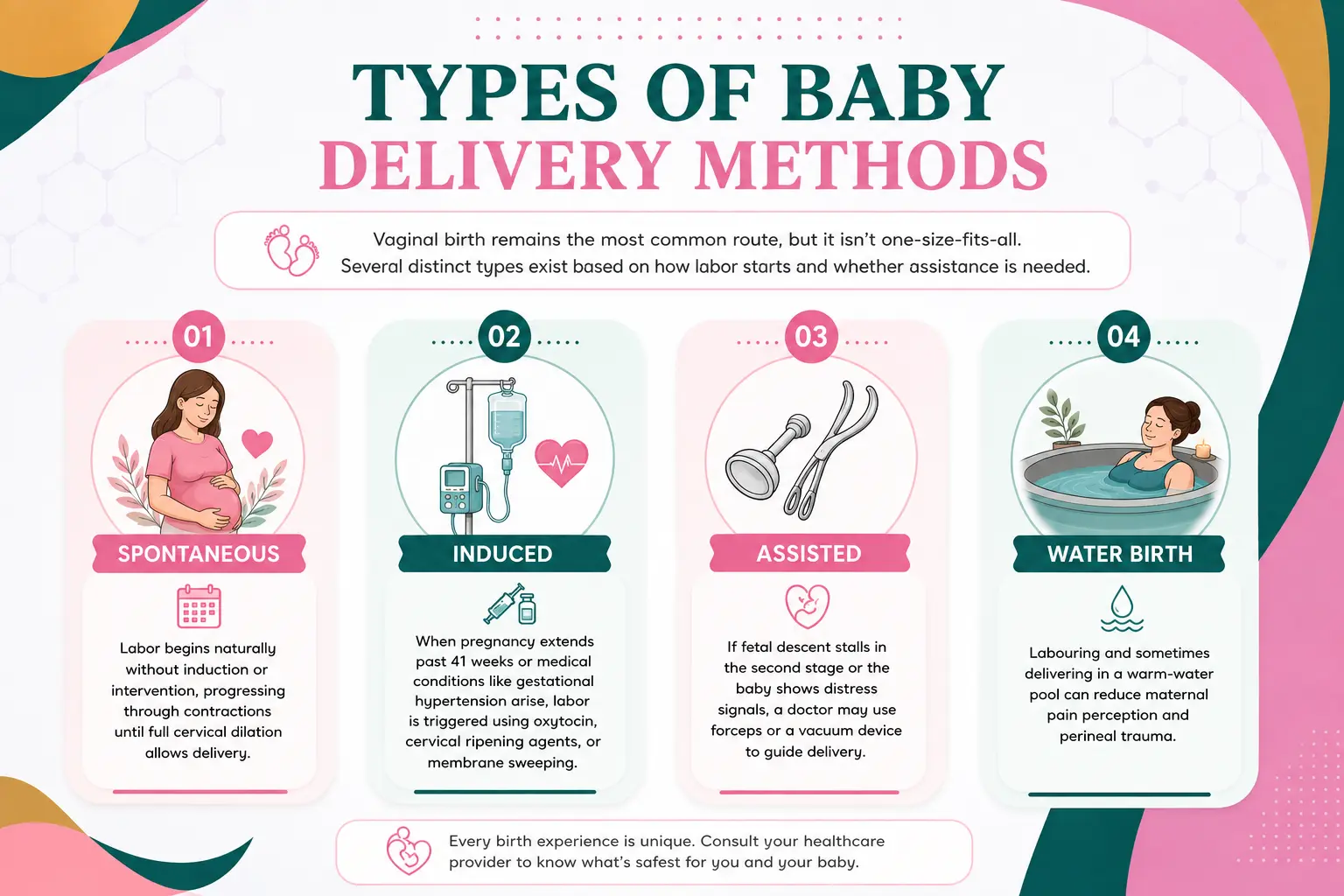
Early prenatal planning helps match the right delivery approach to each pregnancy. Pregnancy care in Bandra East covers monitoring, birth planning, and individualized delivery guidance.
When Is a C-Section the Recommended Option?
C-section isn’t a backup plan it’s a primary clinical decision in specific obstetric situations. Understanding when it’s indicated helps patients prepare.
Planned: An elective cesarean is scheduled before labor begins, typically for breech presentation, placenta previa, multiple pregnancies, or a previous uterine surgery that raises rupture risk during vaginal labor.
Emergency: When fetal heart rate drops dangerously, labor stalls despite augmentation, or cord prolapse occurs, an emergency C-section can be performed within minutes speed in this scenario is the clinical priority.
VBAC: Vaginal birth after cesarean is a real option for many women; eligibility depends on the type of uterine incision from the prior surgery, and most low transverse scar cases can attempt VBAC with appropriate monitoring.
Recovery: C-section recovery typically takes 6–8 weeks compared to 2–4 weeks for uncomplicated vaginal delivery, with activity restrictions around lifting and driving in the early weeks.
For women navigating delivery decisions after a prior C-section or with complex pregnancy histories, What Does A Healthy Pregnancy Look Like Month By Month? outlines what candidacy for vaginal birth looks like.
Why Choose Dr. Sneha Patil?
Dr. Snehal Patil is a gynecologist and obstetrician with over 15 years of clinical experience managing normal deliveries, high-risk pregnancies, and complex obstetric cases. Holding an MBBS and MS in Obstetrics & Gynaecology with advanced training in laparoscopy, hysteroscopy, infertility, and obstetric ultrasound, she practices at Tanishka Polyclinic, Bandra East. She’s delivered care across a wide spectrum from routine vaginal births to emergency C-sections requiring rapid decision-making.
Her patients aren’t managed with a template. Birth plans are reviewed at every trimester visit, delivery mode decisions happen with full clinical data in hand, and complications when they arise are managed without delay. That’s the standard she maintains.
Unsure which delivery option is right for your pregnancy stage?
Frequently Asked Questions
Is water birth safe for all pregnancies?
No. Water birth isn’t suitable for high-risk pregnancies, breech presentations, or cases with meconium-stained amniotic fluid.
What decides between a normal delivery and C-section?
Fetal position, labor progress, placenta location, and maternal-fetal health together determine the safest delivery route.
Can I request a C-section without medical indication?
Elective C-section without clinical need isn’t routinely recommended; risks of surgery and recovery are discussed before any decision is made.
Is VBAC safe after one previous C-section?
VBAC is safe for eligible candidates with a low transverse uterine scar, continuous fetal monitoring, and immediate surgical backup available.