
- Rapid uterine growth: roughly doubles in size between month 4 and month 6
- Ligament stretching: shows up most with sudden movement, coughing, or standing up too fast
- A shifting center of gravity that changes posture and loads the lower back and abdomen differently
- Slower digestion: pregnancy hormones relax gut muscles, and that alone can cause real gas and bloating pain.
Why Abdominal Pain Is Common in the Second Trimester
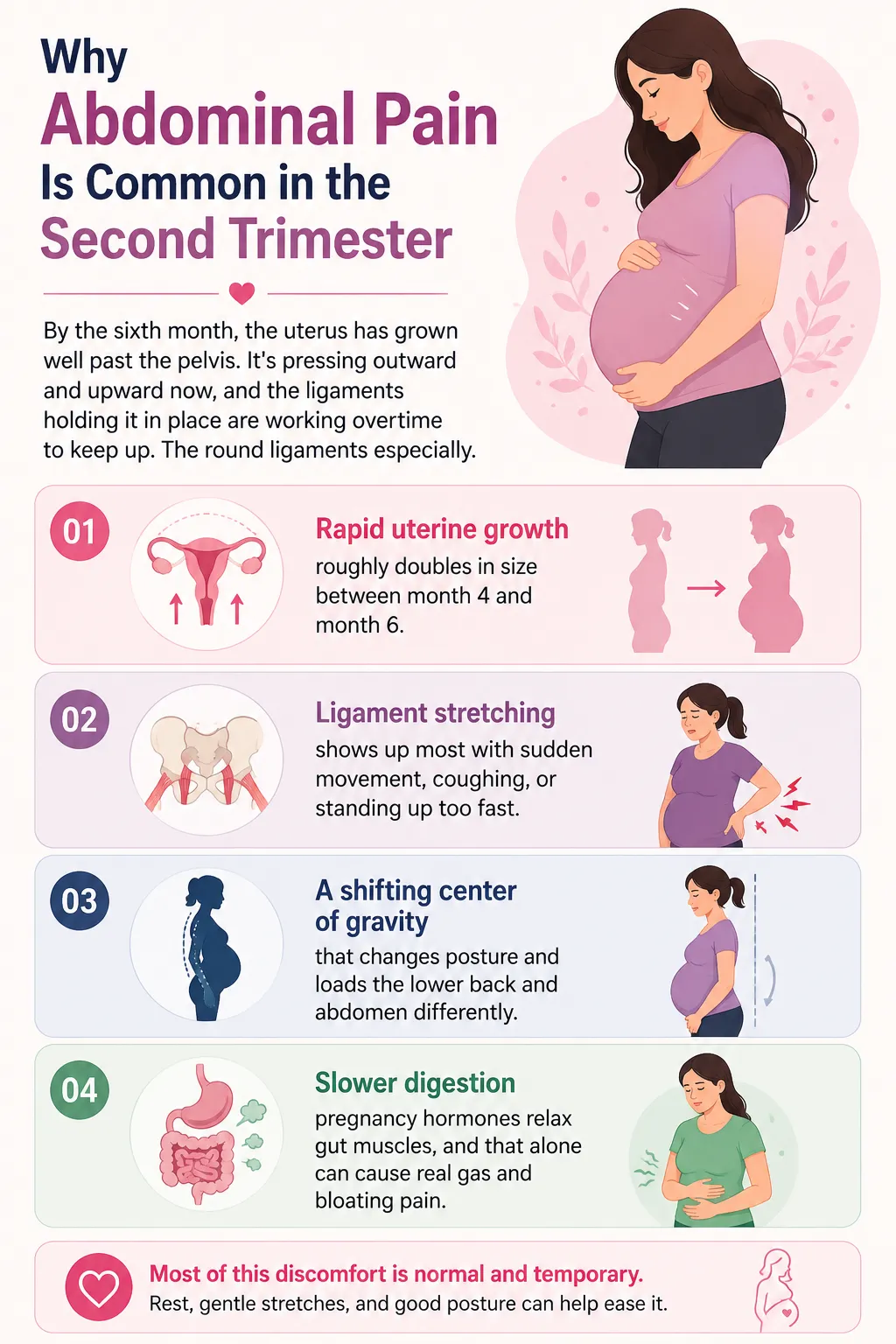
None of this means something is wrong. The body is doing a lot of physical work in a short window, and the abdomen happens to be where most of that work gets felt.
If you have ongoing discomfort or concerns, an evaluation can help identify the cause and guide your care. Book an Appointment to discuss your symptoms and care options.
Normal vs Concerning Pain: How to Tell the Difference
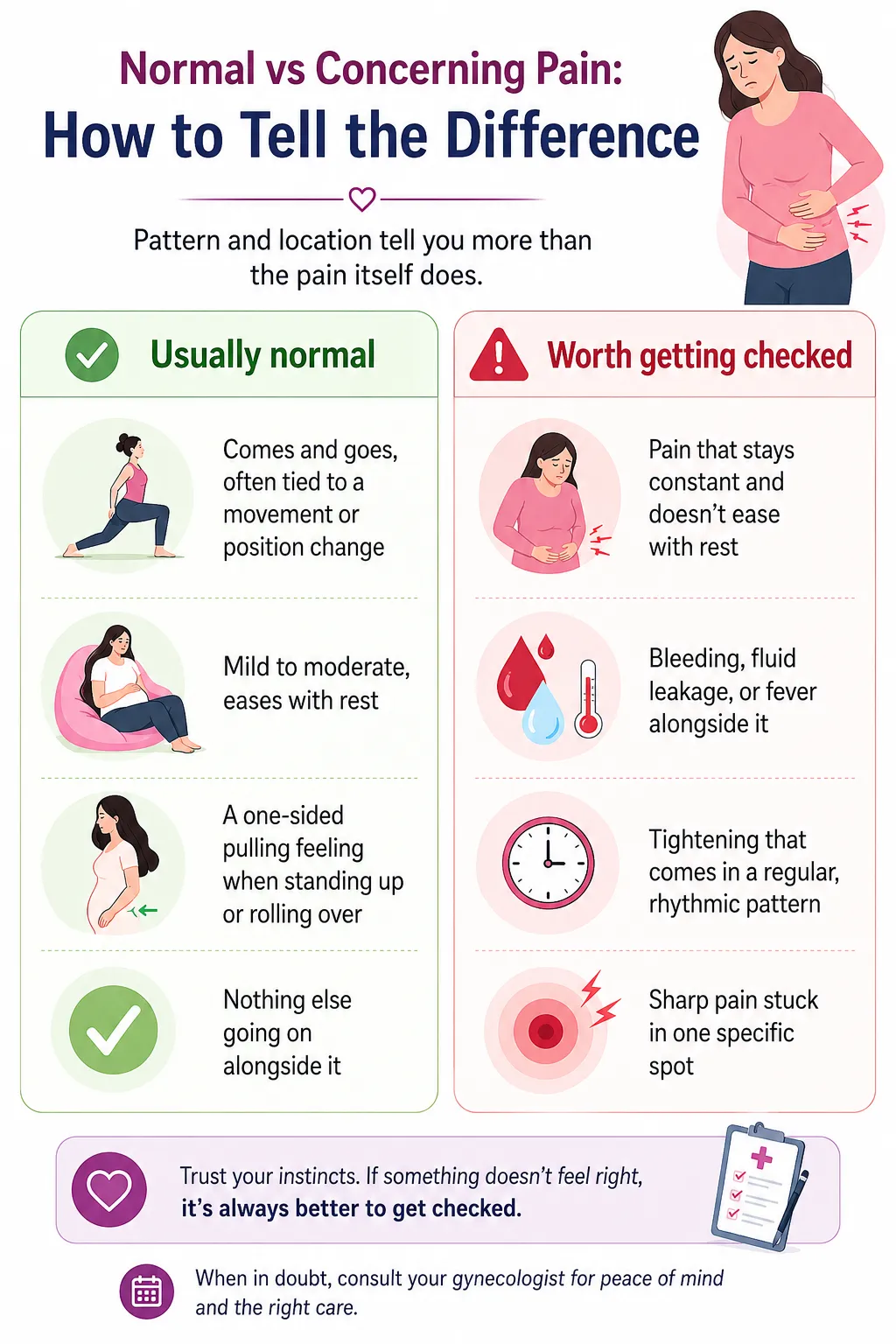
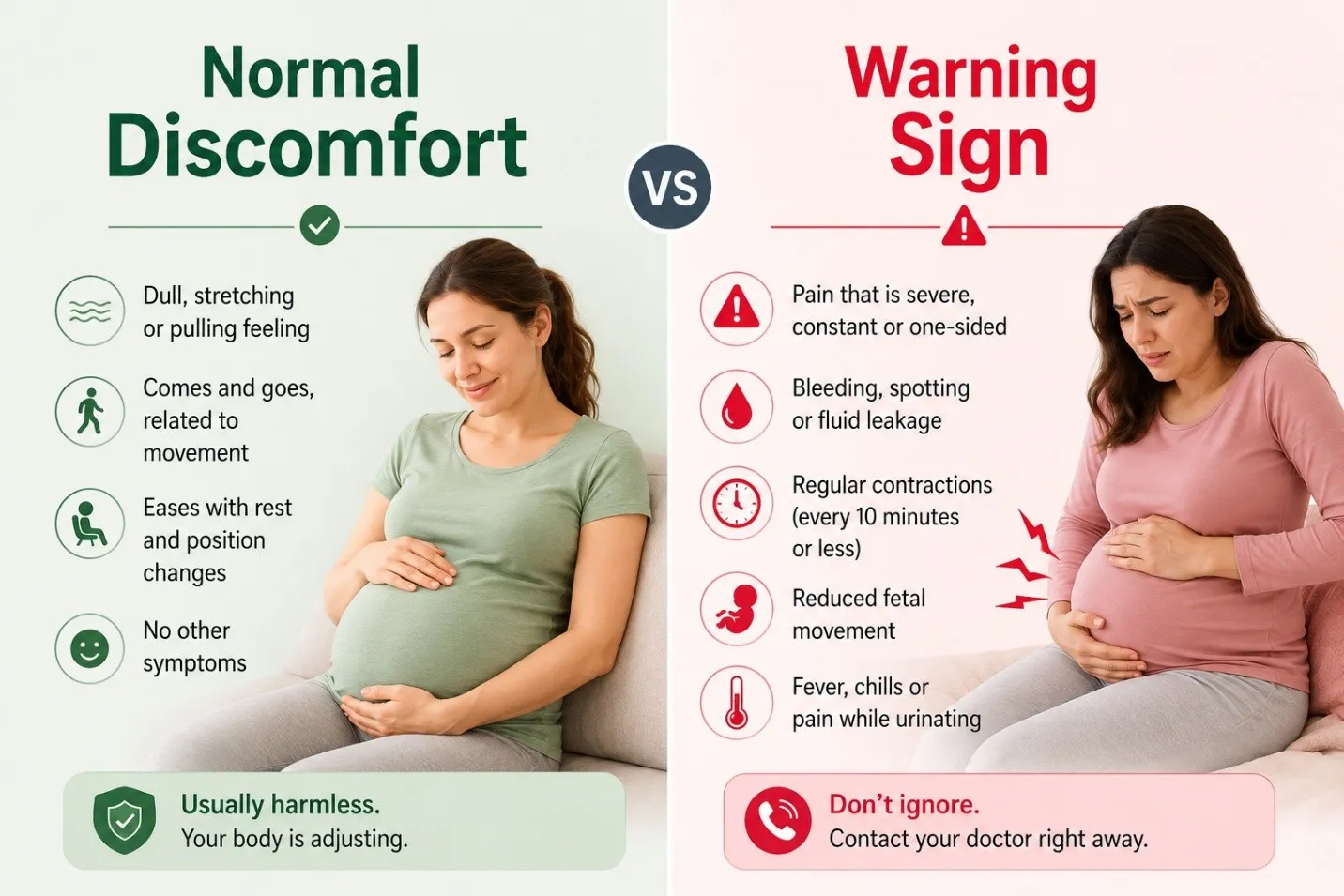
Normal pain is usually mild, comes and goes, and may be linked to movement. Persistent, severe, or unusual pain, especially with other symptoms, should be medically evaluated.
“Round ligament pain usually shows up as a quick, sharp pull on one side when you change position. It’s uncomfortable but expected around 24 to 28 weeks.” — Dr. Snehal Patil, Gynecologist, Bandra East
Warning Signs That Need Same-Day Medical Attention
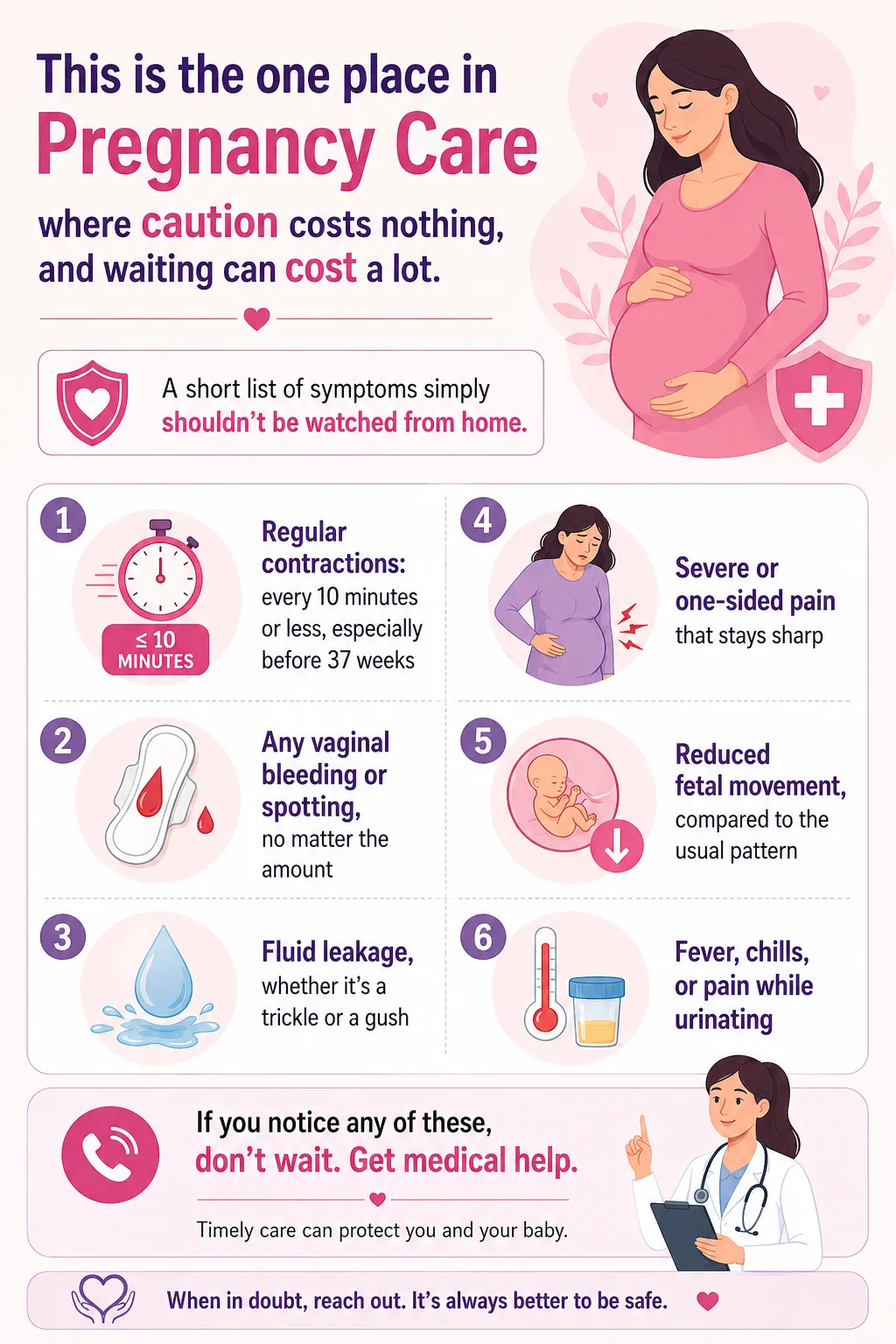
Patients with any combination of these usually get moved into closer high-risk pregnancy monitoring until things settle. A precaution, not a diagnosis.
Sudden, severe, or one-sided pain at this stage is worth getting checked the same day, not waited out.
“Pain that comes with contractions less than 10 minutes apart, fluid leakage, or reduced fetal movement should be evaluated the same day, not observed at home.” — Dr. Snehal Patil, Gynecologist, Bandra East
What to Expect During a Check-Up for This Symptom
A visit for abdominal pain at this point is usually quick and fairly routine. A physical exam, a blood pressure check, and fetal heart rate monitoring. An obstetric ultrasound gets added if the pain sticks around or if there’s any question about the placenta or cervix.
Routine antenatal check-ups already track most of this on their own. It’s part of why sticking with regular appointments, instead of only showing up once something hurts, tends to catch problems earlier. These same visits also lay the groundwork for a smooth normal delivery, through steady monitoring of the baby’s position, growth, and movement as the pregnancy moves along.
Simple Relief Measures for Everyday Discomfort
Once pain has been checked and it’s ordinary stretching or digestion, a few small changes tend to help:
- Move slowly: rolling onto the side before sitting up takes pressure off the ligaments
- A pregnancy pillow for side-lying support at night
- A warm, not hot, compress on the area
- Smaller meals, more often, to ease digestive load
- A short walk, which helps both gas and stiffness
Rest matters more here than people expect. A body doing this much daily construction work needs the downtime as much as it needs movement.

The same team also supports patients through PCOS treatment and fertility planning before pregnancy, for anyone earlier in that journey.
Frequently Asked Questions
Is lower abdominal pain normal at 6 months pregnant?
Yes. Mild, intermittent pain is common due to round ligament stretching and uterine growth at this stage.
When does round ligament pain usually start and stop during pregnancy?
It typically starts around 18 to 24 weeks and eases off by the third trimester as the ligaments adjust.
Can lower abdominal pain at 6 months be a sign of preterm labor?
Regular, rhythmic tightening before 37 weeks can point to preterm labor and needs same-day evaluation.
Is it safe to take paracetamol for abdominal pain during pregnancy?
Generally yes, paracetamol is considered safe in pregnancy, but a doctor should confirm the right dosage.
Should one-sided pain at 6 months pregnant be checked immediately?
Yes, if it’s sharp and persistent. One-sided pain that doesn’t ease with rest should be evaluated the same day.