

A healthy pregnancy starts with a preconception check-up, folic acid supplementation, and control of any existing medical conditions well before conception happens. Blood tests, vaccination status, weight management, and screening for thyroid or diabetes form the foundation of this planning phase. Lifestyle changes like quitting smoking, limiting caffeine, and eating a diet rich in iron and calcium round out the picture.
According to Dr. Snehal Patil, a leading Gynecologist in Bandra East, “Most complications linked to pregnancy can be reduced significantly when couples plan ahead and get their health checked three to six months before trying to conceive.”
What Should You Check Before Trying To Conceive?
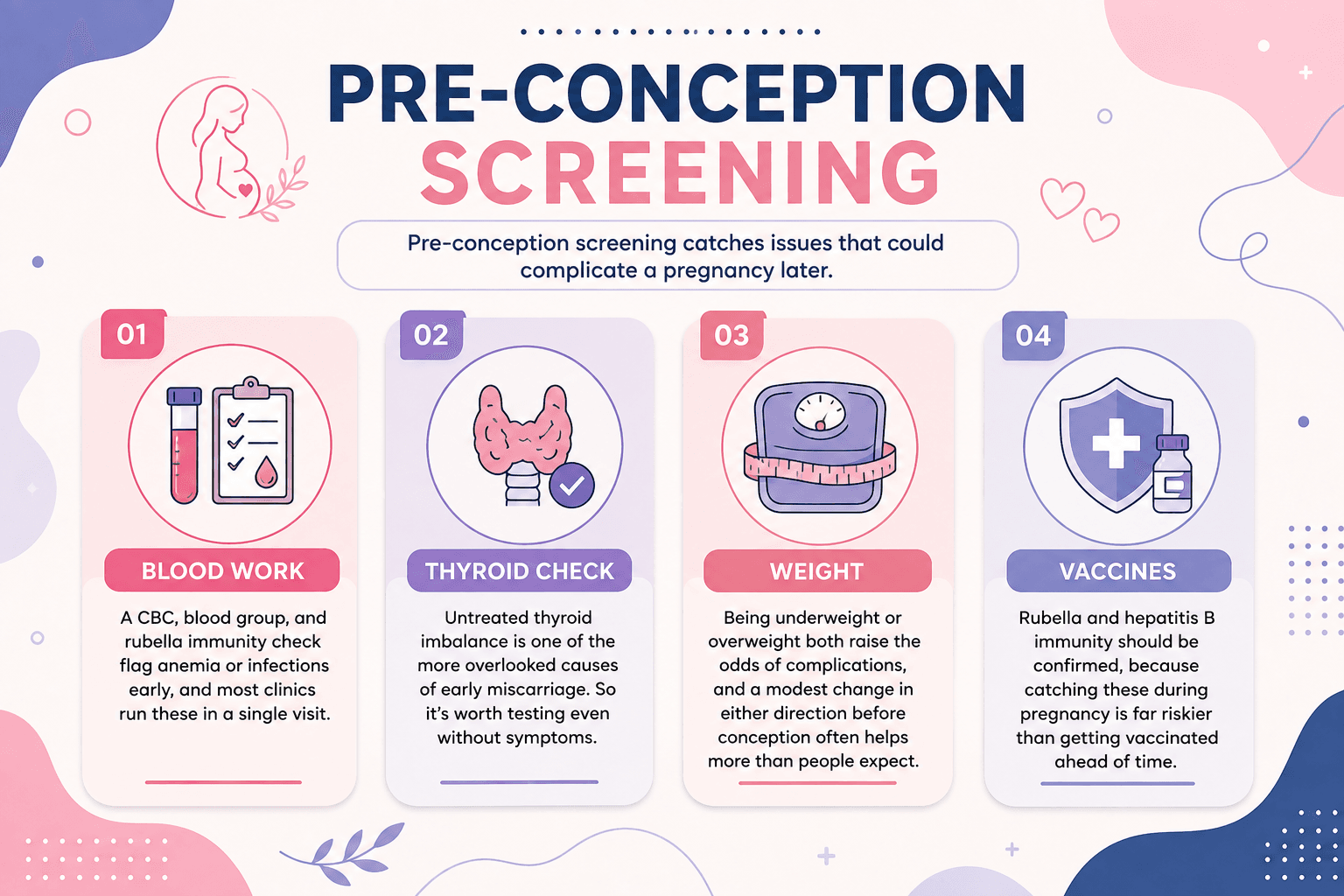
These checks take a few weeks to complete, so starting early leaves room to fix any deficiencies, and where PCOS treatment is part of the picture, sorting it out beforehand improves the odds further.
How Can You Support A Healthy Pregnancy Once It Begins?
Once pregnancy is confirmed, care shifts from screening to steady monitoring and support.
Folic Acid: Continuing folic acid through the first trimester lowers the risk of neural tube defects, and most doctors recommend starting it before conception too.
Nutrition: Iron, calcium, and protein needs rise fast in pregnancy. Crash dieting or skipping meals during this window isn’t a good idea at all.
Check-ups: Regular antenatal visits track fetal growth and catch issues like gestational diabetes or high blood pressure before they turn serious.
Rest: Sleep and stress management matter more than most people expect, since chronic stress has been linked to preterm labor in several studies.
Every pregnancy plays out differently, and conditions like PCOS can shape how the journey unfolds, something covered in more depth in Getting Pregnant with PCOS After 40.
Why Choose Dr. Sneha Patil?
Dr. Snehal Patil holds an M.B.B.S. and an M.S. in Obstetrics & Gynaecology, with additional training in laparoscopy, hysteroscopy, and obstetric ultrasound. With over 15 years of practice in Bandra East, she has handled everything from routine antenatal care to high-risk pregnancies involving diabetes, hypertension, and multiple gestations.
Patients who plan ahead with her typically catch thyroid or nutritional gaps months before they’d otherwise surface, which cuts down on last-minute complications during delivery. Planning isn’t glamorous, but it works.
Wondering if your body is ready for pregnancy?
Frequently Asked Questions
When should pre-pregnancy planning start?
Ideally three to six months before trying to conceive, to allow time for screening.
Is folic acid necessary before conception?
Yes, starting folic acid before conception reduces the risk of neural tube defects significantly.
Can PCOS affect pregnancy planning?
Yes, PCOS can delay conception and needs evaluation before or early in pregnancy planning.
How often are antenatal check-ups needed?
Monthly visits are typical initially, increasing to biweekly or weekly closer to delivery.